
Blaufränkish/Lemberger
Blaufränkish/Lemberger in Erie County
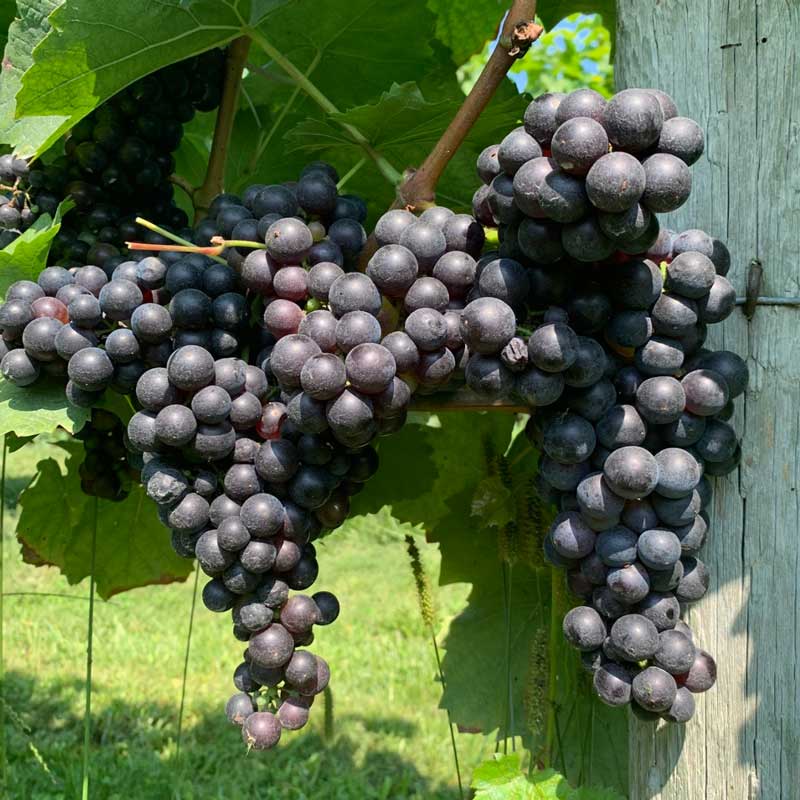
The Blaufränkisch vine is known as an early budding variety that can be susceptible to early spring frost. It is a late ripening variety, and tends to be planted in warmer vineyard sites. Among the viticultural hazards that Blaufränkisch is most prone to are powdery and downy mildews. Blaufränkisch is considered a high productive vine capable of producing high yields fairly easily. In some parts of Europe it is not uncommon to see it harvested at 100 hectolitres per hectare (4,300 US quarts per acre). However over-cropping the vine has a tendency to produce thin wines with many green, weedy notes. Wikipedia
General Details
Penn State University
Planting Properties
Crop Yield
Cold and Frost Sensitivity
Crop/Disease Resilience
Grape Maturity and Composition
Juice Yield, Processing and Chemistry
Wine Production
Consumer Demand
Pruning Methods
Here are some resources you can use to learn more about pruning methods:
Growth Habit
Here are some resources you can use to learn more about the growth habit of different cultivars:
- https://extension.psu.edu/mechanized-grapevine-fruit-zone-leaf-removal
- https://extension.psu.edu/grapevine-fruit-zone-leaf-removal
- https://extension.psu.edu/early-season-grapevine-canopy-management-part-ii-early-leaf-removal-elr
- https://extension.psu.edu/a-general-review-of-applied-grapevine-nutrition-principles
- https://extension.psu.edu/a-brief-review-of-fruit-zone-management-principles
Growth Vigor
Here are some resources you can use to learn more about the growth vigor of different cultivars:- https://extension.psu.edu/shoot-thinning-considerations-in-bunch-grape-vineyards
- https://extension.psu.edu/early-season-grapevine-canopy-management-shoot-thinning
- https://extension.psu.edu/a-general-review-of-applied-grapevine-nutrition-principles
- https://extension.psu.edu/the-fundamentals-of-grapevine-tissue-sampling-for-nutrient-analysis
- https://extension.psu.edu/assessing-and-managing-potassium-concentration-in-the-vineyard
Bud Break Timing
Here are some resources you can use to learn more about the bud break timing of different cultivars:
Cold Injury
Here are some resources you can use to learn more about the cold injury risks of different cultivars:
- Cold injury of buds:
https://extension.psu.edu/grapevine-cold-injury - Cold injury of permanent vine structures:
https://extension.psu.edu/grapevine-cold-injury
Chances of reaching desired maturity
Here is a resource you can use to learn more about the chances the fruit will reach desired maturity:
Harvest Timing
Here is a resource you can use to learn more about harvest timing:
Trellis Systems
Here is a resource you can use to learn more about trellis systems:
Disease and Pest Resilience
Here are several resources you can use to learn about different diseases and pest issues with growing cultivars:
- Difficulty controlling sour rot:
https://extension.psu.edu/grape-sour-rot - Difficulty controlling downy mildew:
https://extension.psu.edu/fungicide-resistance-management-in-vineyards
https://extension.psu.edu/grape-disease-downy-mildew
https://extension.psu.edu/downy-mildew-on-grapes - Difficulty controlling powdery mildew:
https://extension.psu.edu/fungicide-resistance-management-in-vineyards
https://extension.psu.edu/powdery-mildew-of-grapes-in-home-gardens - Difficulty controlling botrytis bunch rot
https://extension.psu.edu/botrytis-bunch-rot-winemaking-implications-and-considerations
https://extension.psu.edu/grape-disease-botrytis-bunch-rot
https://extension.psu.edu/fungicide-resistance-management-in-vineyards - Difficulty controlling black rot:
https://extension.psu.edu/grape-disease-black-rot-photo-gallery
https://extension.psu.edu/grape-disease-black-rot - Difficulty controlling phomopsis:
https://extension.psu.edu/phomopsis-cane-leaf-spot-and-fruit-rot-in-home-vineyards
Chemistry: pH
Here is a resource you can use to learn more about a cultivar’s pH chemistry: